Okinawa Weather by Month: JMA Naha Normals, Rainy Season from About May 10 to June 21, the Most Typhoon Approaches in August, and a 17.3°C January Average
According to Japan Meteorological Agency normals (1991–2020), Naha's average temperature is 17.3°C in January and 29.1°C in July. An average of 7.9 typhoons a year approach Okinawa and Amami, most of them in August (2.3) and September (2.0).
When is the best weather to visit Okinawa?
For swimming, early May and July to October have the right temperatures, and November to April is good for walking around. That said, May and June are the rainy season and July to October is typhoon season, so leave some slack in your schedule. All the figures below are Japan Meteorological Agency normals (1991–2020) for the Naha observation station.
- Average annual temperature 23.3°C, annual rainfall 2,161mm
- Even in winter (December to February), the average low is around 15°C
- The hottest months, July and August, have average highs of 31.9°C and 31.8°C
How warm and how rainy is each month?
Average high/low temperatures and monthly rainfall.
- January: 19.8°C/14.9°C, 101.6mm
- February: 20.2°C/15.1°C, 114.5mm
- March: 21.9°C/16.7°C, 142.8mm
- April: 24.3°C/19.1°C, 161.0mm
- May: 27.0°C/22.1°C, 245.3mm
- June: 29.8°C/25.2°C, 284.4mm (the wettest month of the year)
- July: 31.9°C/27.0°C, 188.1mm
- August: 31.8°C/26.8°C, 240.0mm
- September: 30.6°C/25.8°C, 275.2mm
- October: 28.1°C/23.5°C, 179.2mm
- November: 25.0°C/20.4°C, 119.1mm
- December: 21.5°C/16.8°C, 110.0mm
What to wear
- December to February: a single long-sleeved layer during the day, and a light jacket for windy evenings by the sea
- May to October: short sleeves, a hat, and sunscreen. Air conditioning indoors is strong, so bring one thin long-sleeved top
- June and September are rainy, so pack an umbrella or a rain poncho
When is Okinawa's rainy season?
In an average year, it starts around May 10 and ends around June 21. That's about a month earlier than on mainland Japan.
- In 2026, the rainy season started around May 4, 6 days earlier than average (Okinawa Meteorological Observatory announcement)
- It ended around June 29, 8 days later than average and 22 days later than in 2025
- Both dates are preliminary figures and may be revised to final figures in the autumn
- Even during the rainy season, you more often get a mix of showers and cloudy days than all-day rain. Have an indoor plan ready for each day
When do typhoons usually come?
An average of 7.9 typhoons a year approach the Okinawa and Amami region: 2.3 in August, 2.0 in September, 1.5 in July, and 1.1 in October. The Japan Meteorological Agency counts a typhoon as "approaching" when its center comes within 300km of an observation station.
- With 0.4 in May, 0.6 in June, and 0.3 in November, they can also come during the rainy season and in late autumn
- December to April sees practically none
- Typhoons approach more often and earlier in the year than on mainland Japan (Osaka and elsewhere). For mainland weather, see Osaka Weather by Month: JMA Climate Normals, Rainy Season from Early June to Mid-July, Most Typhoons in September, and an Average August High of 33.7°C
What happens to transportation when a typhoon hits?
The monorail and route buses can be suspended from the first run of the day, and flights at Naha Airport may be canceled one after another. That's what happened with Typhoon No. 7 in June 2026.
- June 26, 2026 (Typhoon No. 7): the Yui Rail was suspended from the first train, and the 4 route bus companies on the main island (Ryukyu Bus Kotsu, Naha Bus, Okinawa Bus, and Toyo Bus) suspended all routes in the morning (Ryukyu Shimpo)
- The same day, Naha Airport was reported to be opening at 9 a.m., with flights expected to resume in the afternoon
- Suspensions are usually decided after a storm warning is issued, so check the official announcements the night before
What should I prepare when a typhoon is forecast?
Check your airline's flight status first, and keep a day's worth of food and water at your hotel. If you have a rental car, it's safer not to drive when the wind is strong.
- Flights: rebooking and refund terms for cancellations vary by airline. Turn on notifications in your airline's app
- Accommodation: ask in advance whether you can extend your stay
- Food: many shops may close on the day of the typhoon
- Disaster alerts: the Japan National Tourism Organization (JNTO) app "Safety tips" sends Earthquake Early Warnings, tsunami warnings, and other alerts in Korean. How to set it up is in Earthquake Preparedness for Your Osaka Trip: the Safety tips Disaster Alert App in Korean, a 24-Hour Korean-Language Hotline, and How to Read Nankai Trough Earthquake Extra Information
- The sea: waves stay high even after a typhoon has passed. For beach safety, see Okinawa Ocean Safety: Habu Jellyfish Advisory (June to September 2026) and Vinegar First Aid, What to Do in a Rip Current, and the Coast Guard's 118
Is there somewhere to take a break on a rainy day?
If you're in the Nakijin area up north, you can use a cafe coupon. Show the coupon screen to the staff before you pay. When you open the coupon from My coupons in the app, instructions for staff appear in Japanese as well. After you get the discount, tap "I got the discount · Mark as used".
 ICHIKA Okinawa沖縄県国頭郡今帰仁村字古宇利2214
Yakuzen Teahouse Ichika gives you 1 free drink (up to 550 yen) when you spend 2,300 yen or more. For more cafe coupons in Okinawa, see See Cafe deals in Okinawa ›.
Verified date and sources
Verified on: October 13, 2026. For typhoons active as of October 2026, check again with the Japan Meteorological Agency and your airline just before you leave.
- Japan Meteorological Agency Naha normals (1991–2020) — monthly average, high, and low temperatures, rainfall, 2,161mm a year: jma.go.jp
- Japan Meteorological Agency typhoon normals (1991–2020) — monthly approaches to Okinawa and Amami, 7.9 a year: jma.go.jp
- Weathernews (2026-05-04) — 2026 Okinawa rainy season began around May 4, average around May 10: weathernews.jp
- Weathernews (2026-06-29) — rainy season ended around June 29, average around June 21, around June 7 in 2025, preliminary figures: weathernews.jp
- Ryukyu Shimpo (2026-06-26) — Yui Rail suspended from the first train during Typhoon No. 7, morning suspension by 4 bus companies, Naha Airport opening at 9: ryukyushimpo.jp
- GayoGayo store information — coupon benefits, addresses, opening hours (checked 2026-10-13)
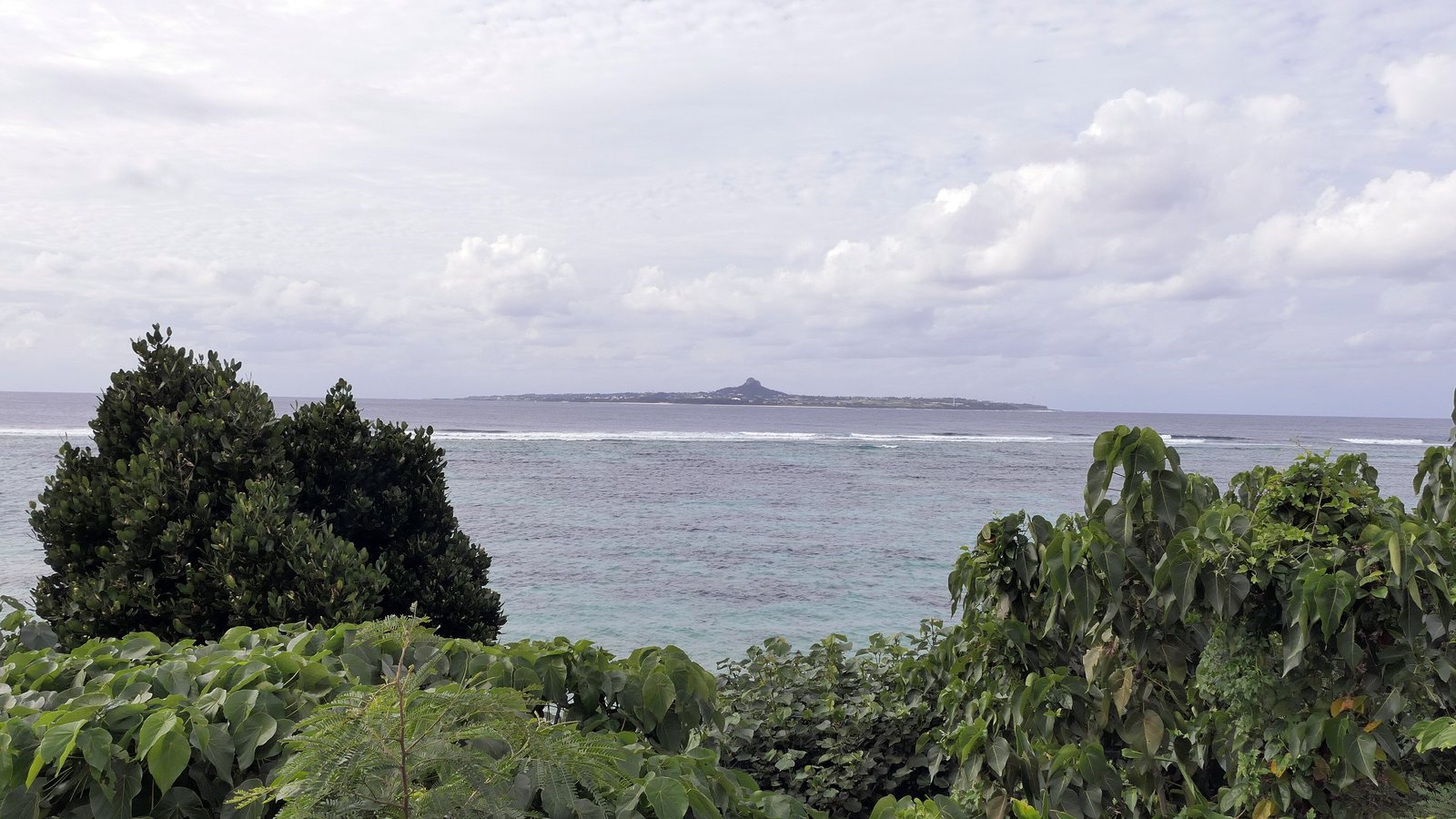
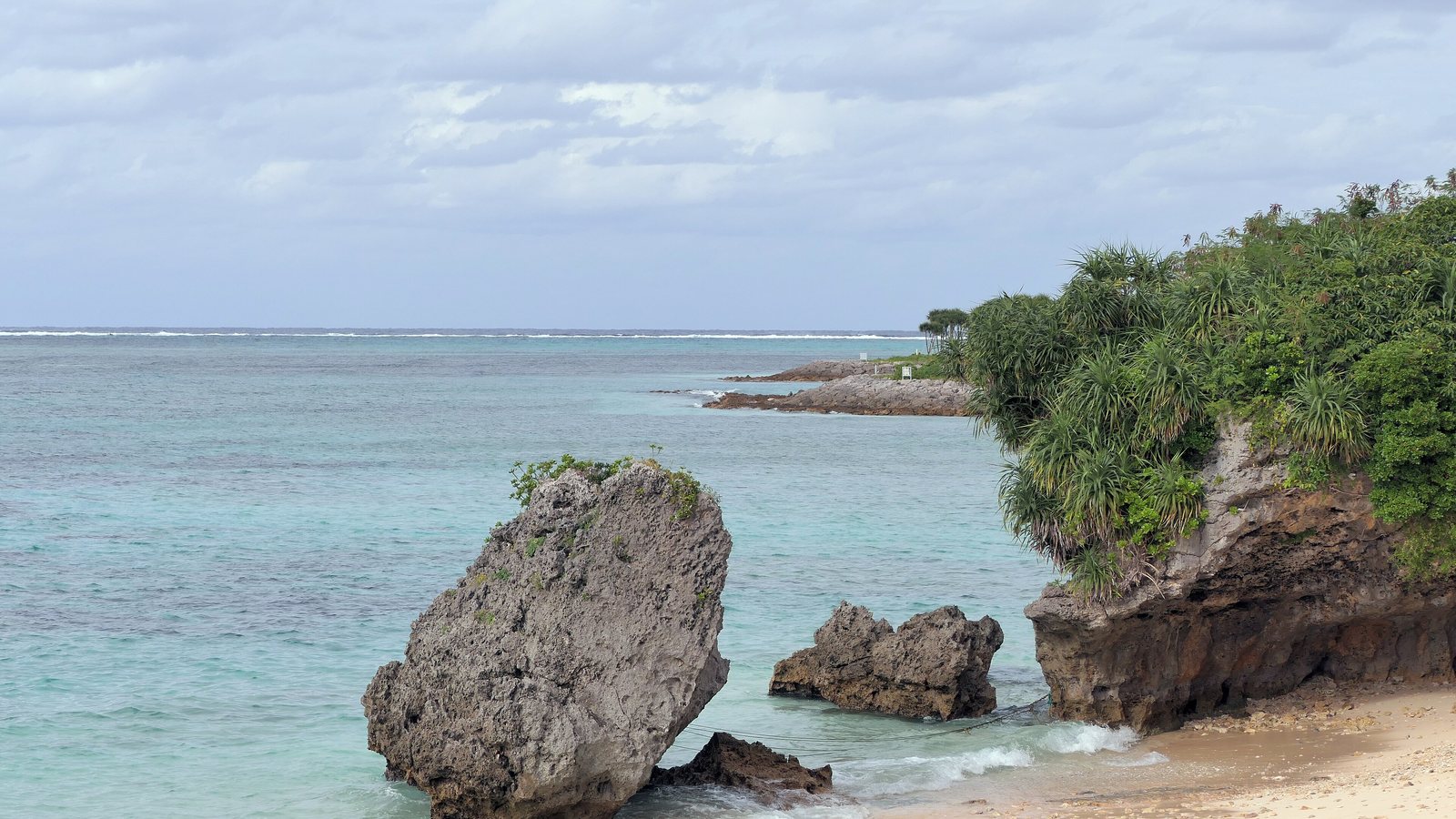
Photo: The sea seen from Emerald Beach at Ocean Expo Park, Hyppolyte de Saint-Rambert, Wikimedia Commons (CC BY 4.0).
Discount shops related to this guide
 10% coupon
Memorid Okinawa Cafe
10% off
 Nakijin Castle Ruins
Visit benefit
Store price
 10% coupon
Kouri Island Station Sorahashi
10% off
 Okinawa Soba Uchiya
Visit benefit
Store price
 Tamashiro Tempura
Visit benefit
Store price
 10% coupon
Drive-in Rikarika Warumi
10% off
More guides
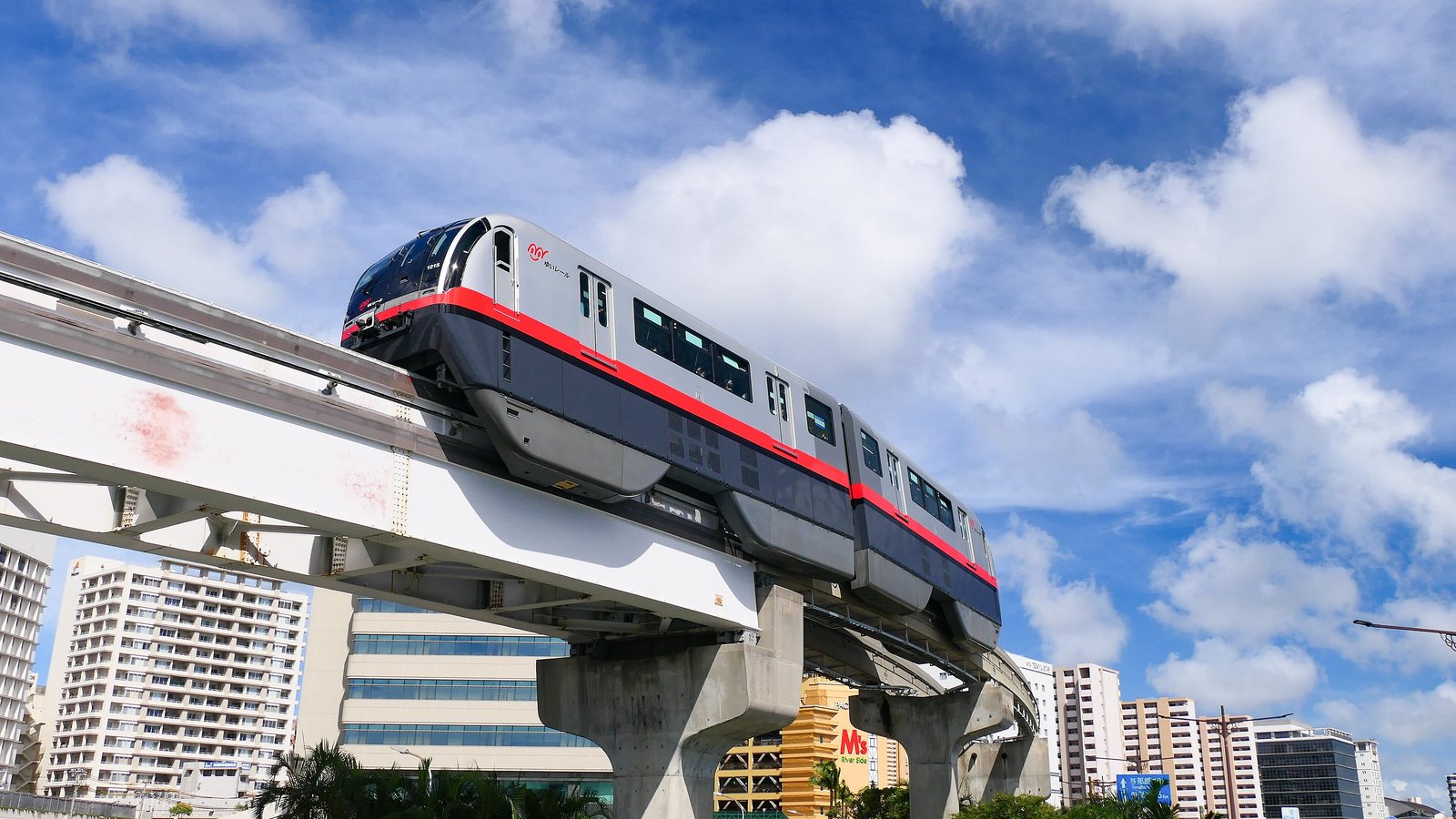 Naha Airport to the City in 2026: Yui Rail Monorail Fares of 250–390 Yen, a 1,000 Yen 1-Day Pass and 1,800 Yen 2-Day Pass, and an 800 Yen Daily Cap for Contactless Cards
 Renting a Car in Okinawa in 2026: A South Korean License Alone Is Not Enough, a Geneva Convention International Driving Permit Is Required, and Naha Bus Lane Hours
 Okinawa Accommodation Tax Starts February 1, 2027: 2% of the Room Rate per Person per Night (Up to 2,000 Yen), Shared with Municipal Taxes in Onna, Chatan, Motobu, Nago, and Elsewhere
 Okinawa Ocean Safety: Habu Jellyfish Advisory (June to September 2026) and Vinegar First Aid, What to Do in a Rip Current, and the Coast Guard's 118